5.0 ★
68 Google reviews
By the Deluxe Smart Film team — reviewed by Awadrey Delgado, founder (500+ switchable film installations in South Florida since 2020) — Updated 12 June 2026
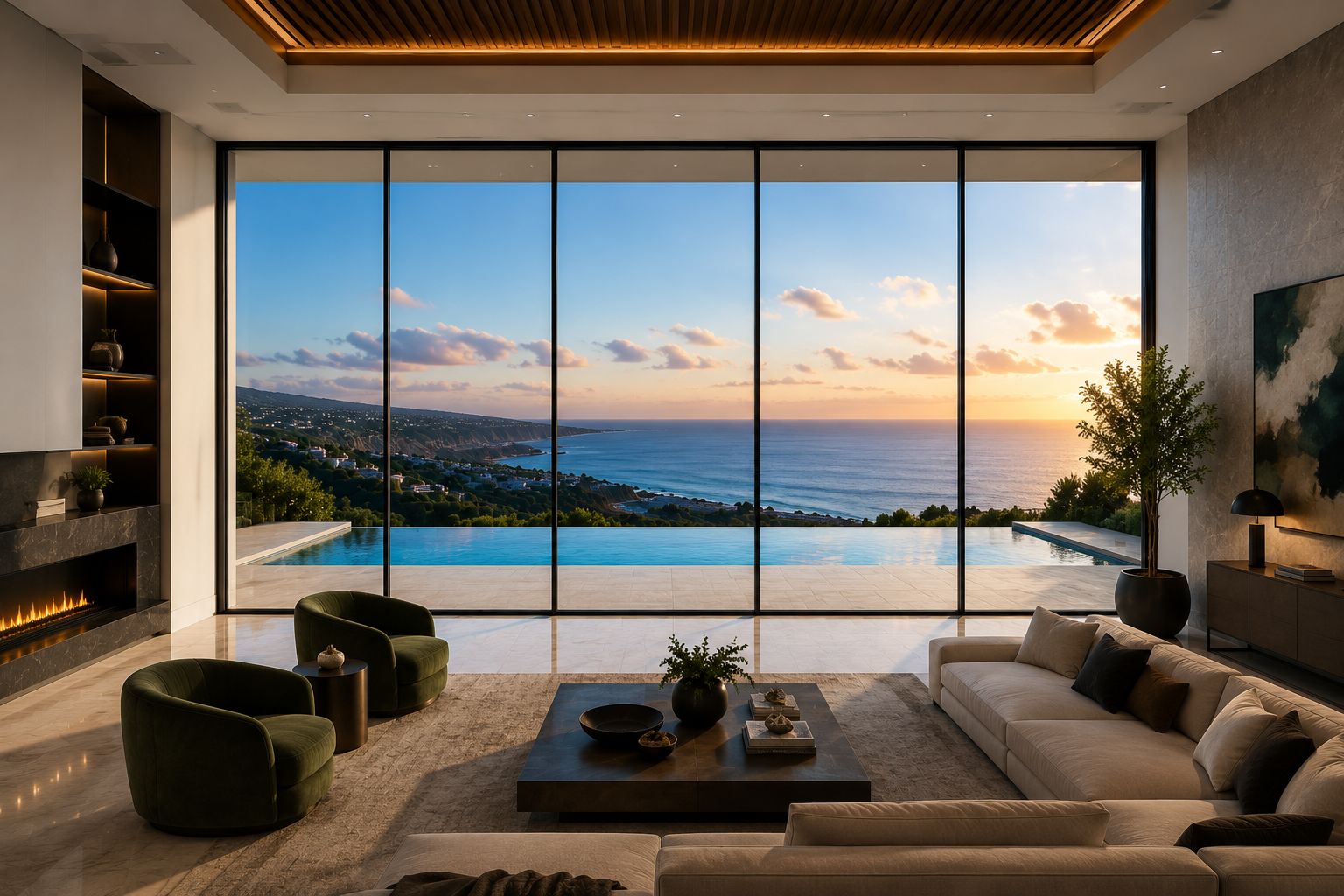
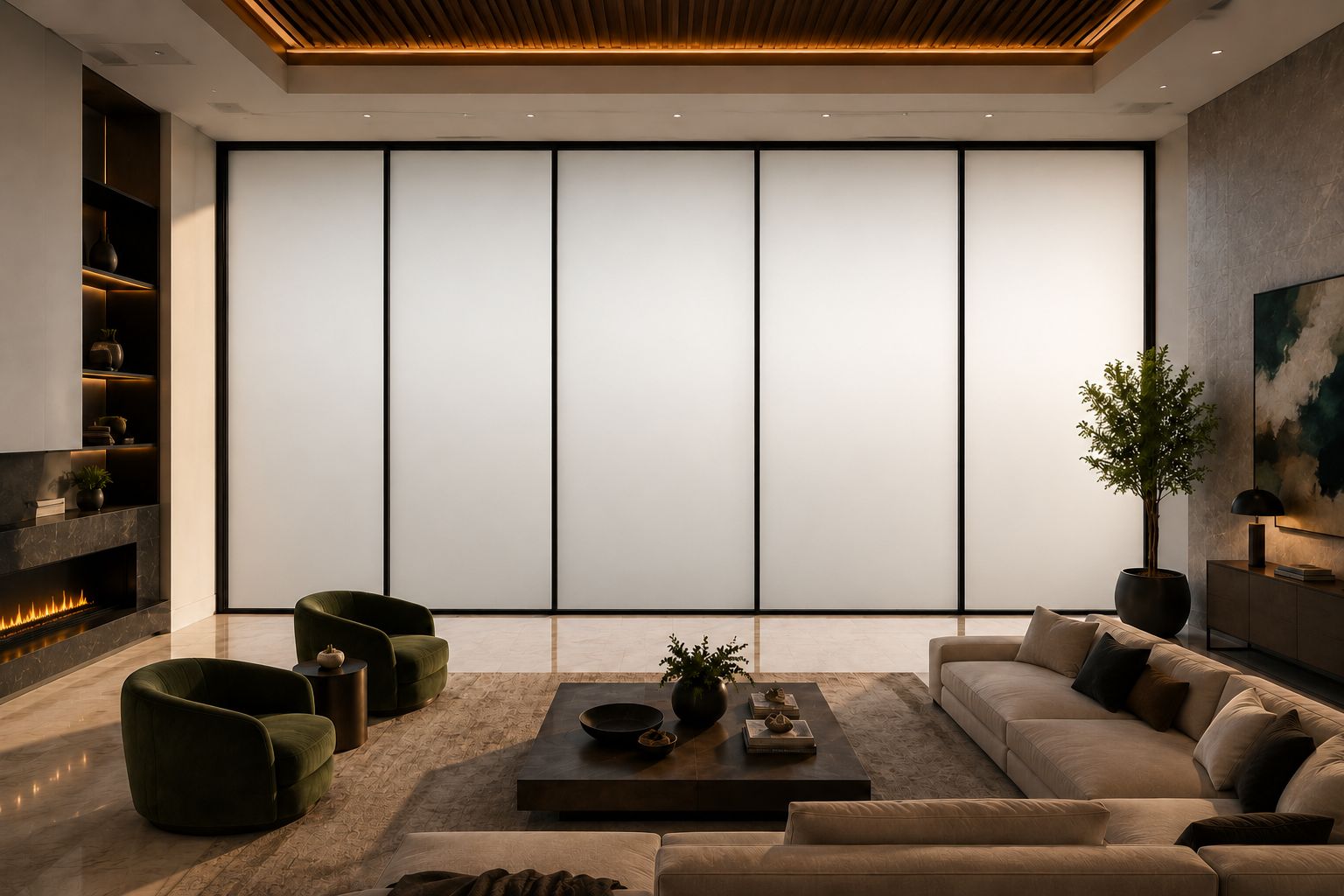
When investing in smart film, the visual quality of the product is paramount. You want it to be as clear as possible when ON, and completely private when OFF. Understanding the metrics of transparency will help you choose the best product.
When power is applied, the film becomes transparent. However, because you are looking through layers of polymer and liquid crystals, there is always a slight degree of light scattering, known as "haze."
High-quality smart films, like those installed by Deluxe Smart Film®, have a very high light transmittance (often over 80%) and a very low haze factor (typically under 3-4%). Lower-quality films may look slightly milky or cloudy even when turned on. Always ask to see a physical sample to evaluate the clarity.
When the power is cut, the film must provide absolute privacy. In its frosted state, high-quality PDLC film blocks visual details entirely, though it still allows ambient light to pass through. This means you cannot see shapes or details through the glass, ensuring total privacy for bathrooms or boardrooms.
Another important factor is the viewing angle. Premium smart films maintain their clarity even when viewed from a sharp angle. Inferior films may look clear straight on but become hazy or distorted when viewed from the side.
The quality of the liquid crystals and the manufacturing process dictate the transparency levels of smart film. Choosing an installer who uses premium-grade PDLC is what gives you the best clarity and privacy the technology can deliver.
Dive into the mechanics of switchable smart film. Understand the electrical components and the physical transformation that makes instant privacy possible.
GuidesWhite, gray, black, colored, gradient and dimmable smart film, printed patterns and laminated smart glass: what each looks like, costs, what we install.
TechnologyExplore the incredible speed of PDLC technology. Find out why the transition is nearly instantaneous and how it benefits your daily life.
PRIVACY. CONTROL. MODERN LIVING.
Premium smart film professionally installed on your existing glass. No blinds. No curtains. Just instant privacy.
Get My Free EstimateMost projects run $55-$90 per sq ft installed. See your range before you give us your number.
5.0 ★
68 Google reviews
500+
installations
2-year
warranty