5.0 ★
68 Google reviews
By the Deluxe Smart Film team — reviewed by Awadrey Delgado, founder (500+ switchable film installations in South Florida since 2020) — Updated 7 September 2026
Window tint is a solar-control product: it cuts heat, glare and UV around the clock and darkens the glass permanently. Smart film is a privacy product: it turns the glass from clear to frosted on demand and does not meaningfully reduce heat. In Miami, tint costs roughly $8 to $20 per square foot installed and smart film $55 to $90. If your problem is heat and glare, buy tint. If your problem is people seeing in — a shower, a bedroom slider, a conference room — buy smart film. When you have both problems on the same sun-facing pane, the usual answer is a solar film on the exterior-facing side and smart film on the interior side.
Ceramic and metallic tints reflect or absorb solar energy, typically rejecting 40 to 70 percent of heat and 99 percent of UV, and reduce glare. They are always on: the glass looks darker or reflective from outside during the day and, at night with interior lights on, tinted glass is not private — people outside can see in.
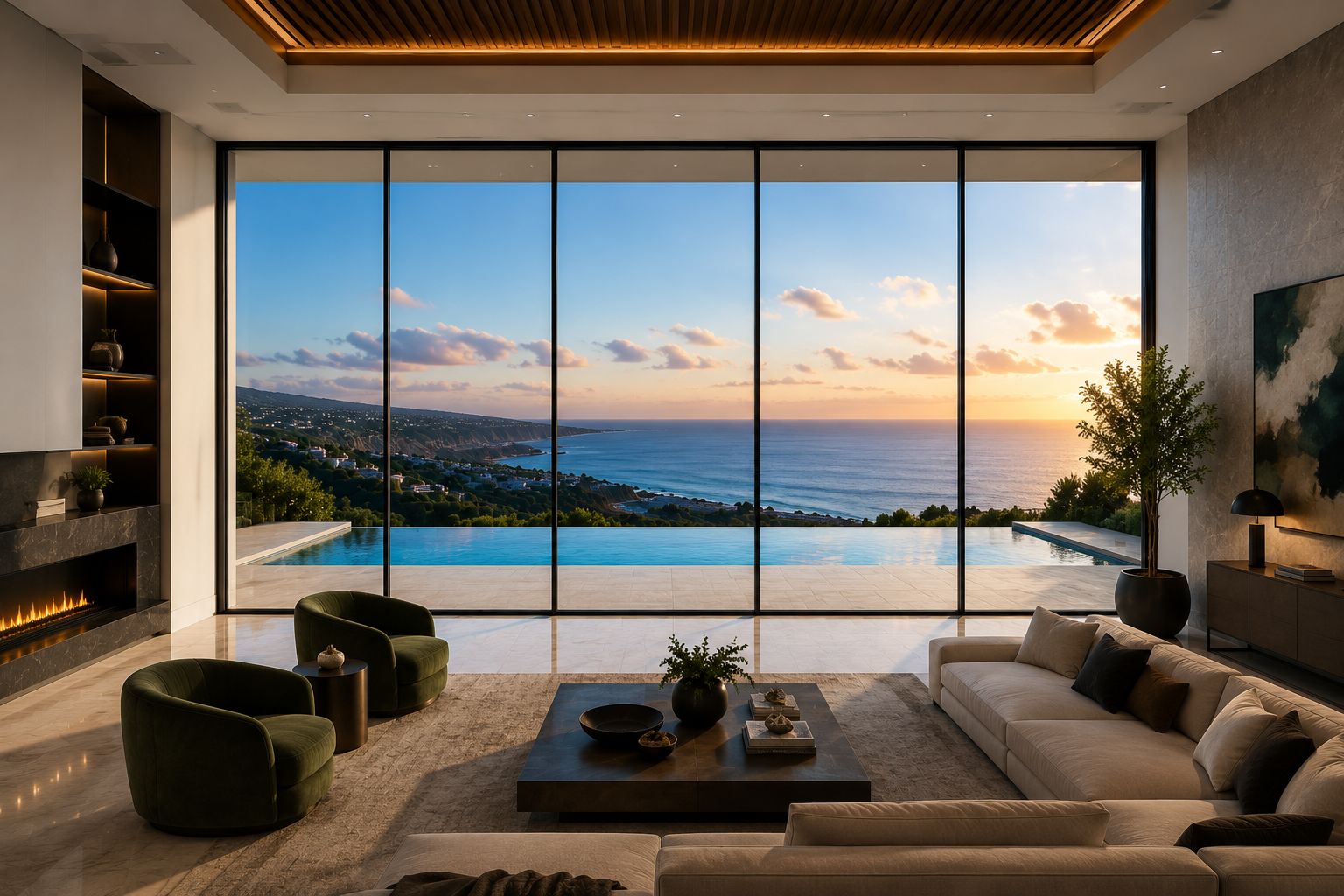
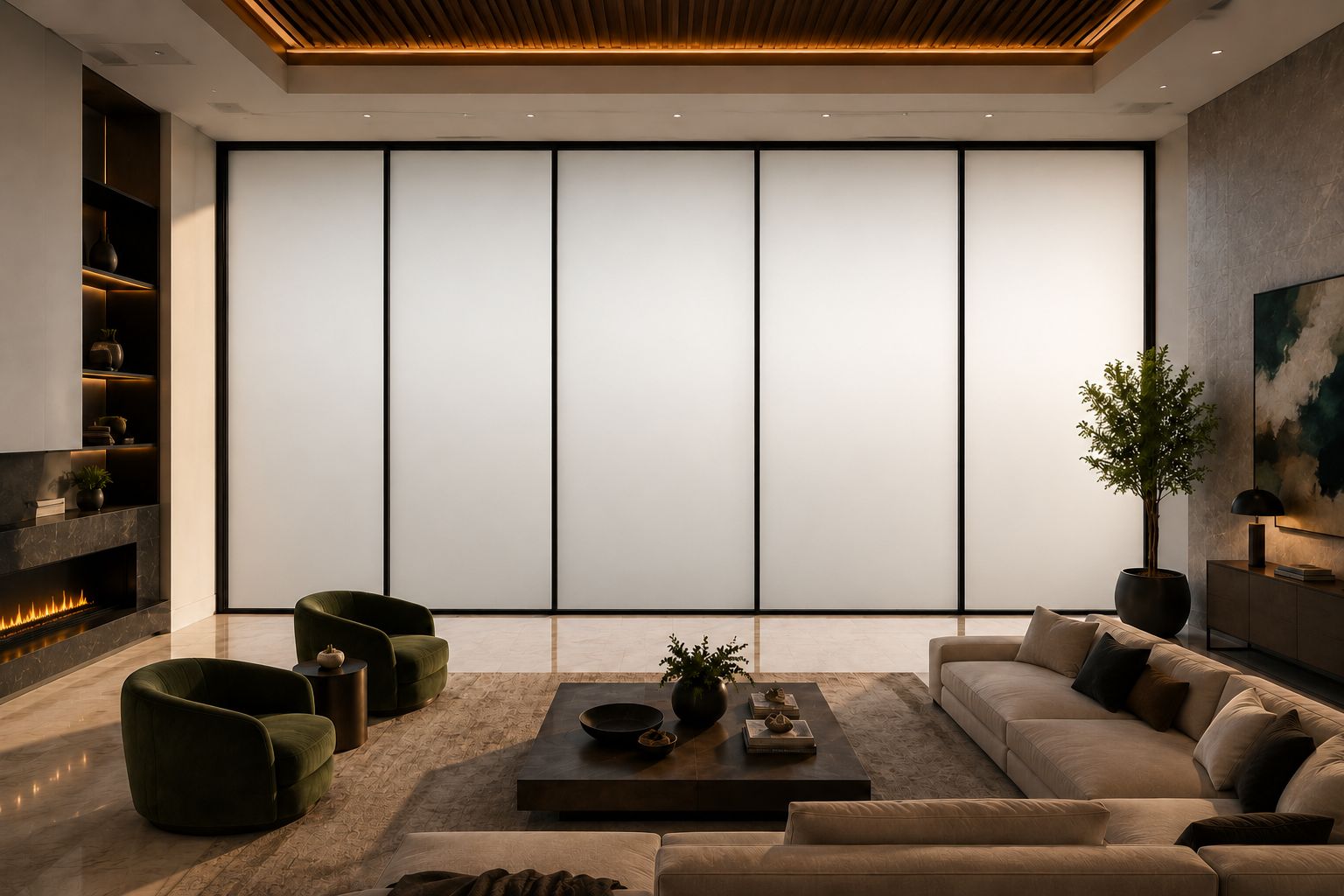
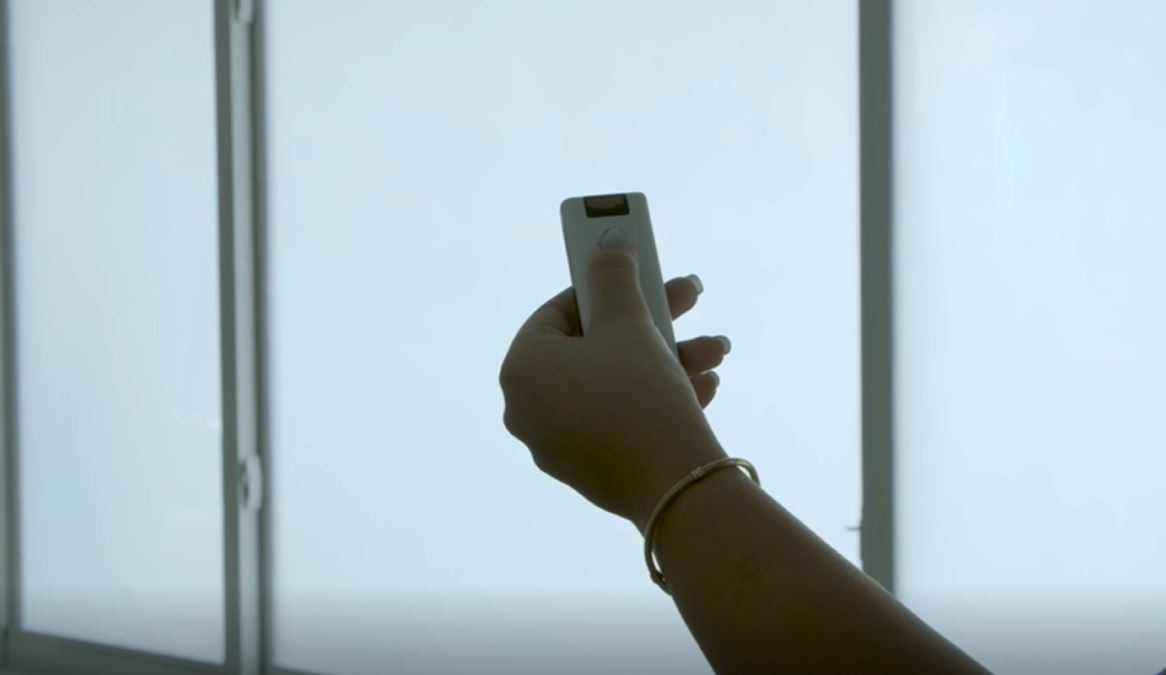
PDLC smart film is clear until you switch it, then reads as an even white frost that blocks the view from both sides, day or night. It is applied to your existing glass, controlled by a switch, remote, app or voice, and fails to the frosted state in a power cut. It blocks most UV in either state but does not reject solar heat the way tint does, and it is not dark or reflective when clear.
Window tint on a two-panel slider: $400 to $1,200. Smart film on the same slider: $2,500 to $5,400. Tint on a 40 square foot shower is pointless (no sun) while smart film there is $2,200 to $3,600. Tint on a conference-room wall does nothing for privacy; smart film on 150 square feet of it is $8,250 to $13,500. Compare on the problem, not the price.
Yes, and on west- and south-facing Florida glass we often recommend it. The solar film goes on the surface that handles heat and the smart film on the interior surface; we check the glass and any factory coating first so the two films and the heat load are compatible. Sliders that already have a dark aftermarket tint sometimes need it removed before smart film can be applied cleanly; we tell you on the site visit.
Heat, glare, fading furniture: tint. People seeing in, a glass wall you want open most of the day, a shower or bedroom: smart film. Both: solar film plus smart film, quoted together. Free on-site measurement across Miami-Dade, Broward and Palm Beach.
Smart film vs blinds → compare. Smart film vs frosted glass → compare. Pricing → smart film cost.
Run a tint shop and want to add smart film? We teach it: see the online smart film installation course.
Looking at smart film for windows specifically? That page covers cost, install and how it goes on your existing glass.
Frosted, mirror, decorative or switchable: how each privacy window film behaves at night and in a bathroom, and what each costs installed in South Florida.
Window FilmTint, frosted, security or switchable film for sliding doors in Fort Lauderdale, Boca Raton and Miami: what each does, cost per door, impact and HOA rules.
Window FilmSecurity film keeps broken glass in place and slows break-ins on South Florida homes, storefronts and offices: thickness, attachment, cost, what it doesn't do.
PRIVACY. CONTROL. MODERN LIVING.
Premium smart film professionally installed on your existing glass. No blinds. No curtains. Just instant privacy.
Get My Free EstimateMost projects run $55-$90 per sq ft installed. See your range before you give us your number.
5.0 ★
68 Google reviews
500+
installations
2-year
warranty