5.0 ★
68 Google reviews
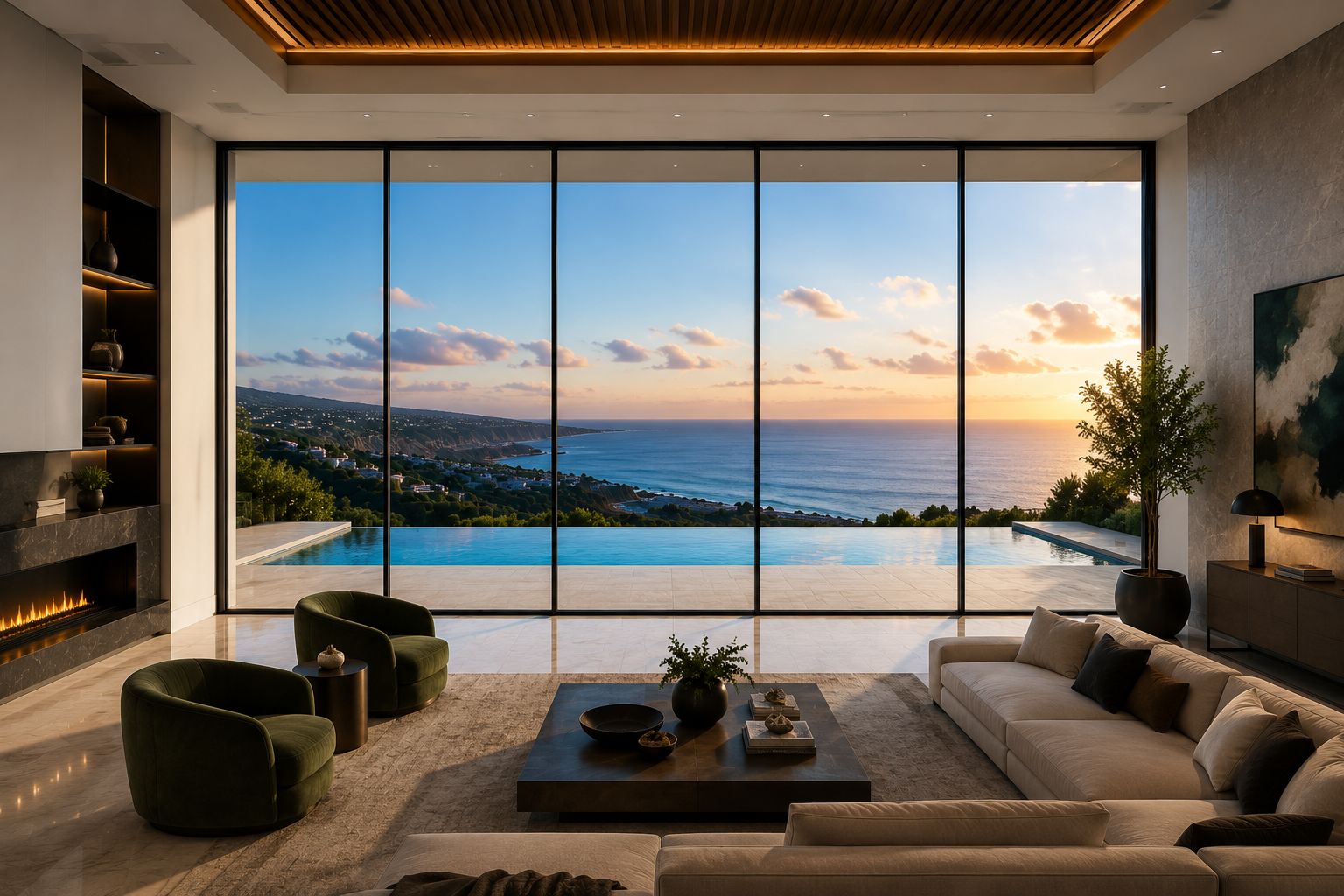
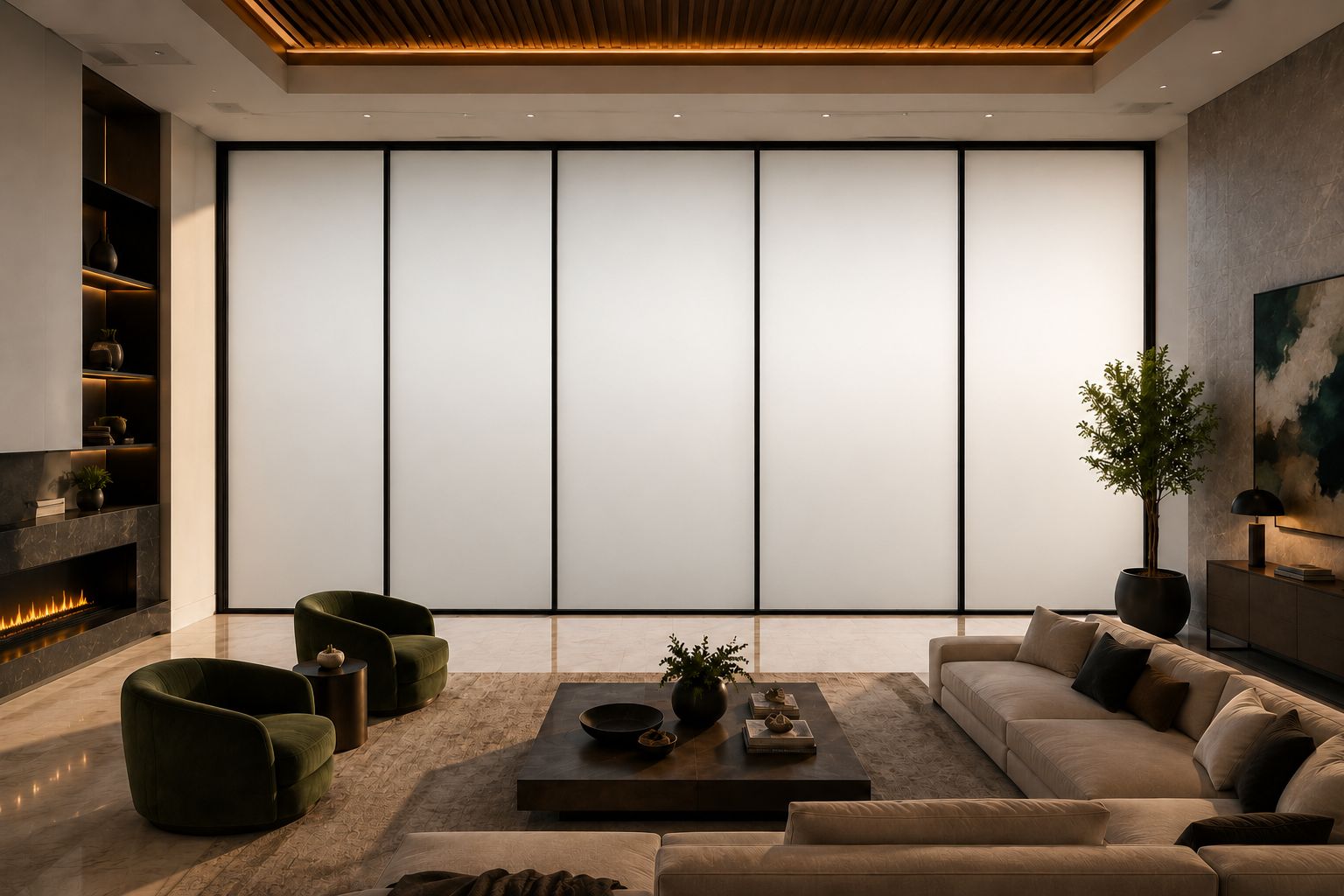
These are the words customers, glaziers and spec sheets use when talking about switchable smart film and smart glass, defined by people who install the product every day. If you are new to the technology, start with our beginner's guide to PDLC smart film.
Each definition is short and practical, with links to the relevant guide or comparison where one exists.
The thin conductive strip (usually copper tape) bonded along a film edge that connects the two conductive layers to the lead wires. Every panel needs at least one; it is covered by the edge seal and frame trim so it is never visible on the finished glass.
When voltage is applied to the film, the liquid-crystal droplets align and light passes straight through, so the glass looks clear. This is the powered state, and the film draws a small current only while it is clear.
Manufacturers rate PDLC film in the tens of thousands of on/off cycles. A bathroom switched four times a day uses about 1,500 cycles a year, so neither a bathroom nor a conference room gets close to the rating in ten years. See our guide on how long smart film lasts.
Most PDLC film is on/off only. Some controllers vary the voltage to give partial opacity between clear and frosted, which is not the same as SPD's continuous tint. Dimming must be specified up front because a standard transformer only switches between the two states.
Sealant applied around the perimeter of every panel after installation to keep moisture out of the liquid-crystal layer. It is the single biggest factor in service life, because an unsealed edge lets humidity cloud the film from the border inward. See the lifespan guide.
Glass that tints gradually when voltage is applied, used for glare and solar control rather than instant privacy. It takes minutes to change state and never goes fully opaque, which makes it unsuitable for a bathroom or meeting room. See our electrochromic vs PDLC comparison.
With the power off, PDLC film is frosted, so a power cut or a switched-off circuit leaves the glass private, not clear. This is the safe direction for a bathroom or bedroom: you lose the view, not the privacy.
With no voltage, the liquid-crystal droplets sit at random angles and scatter light. The glass looks like acid-etched glass: it passes daylight but blocks the view from both sides, day or night.
The permanent alternative to switchable film. Frosted or acid-etched glass is always private and never clears, so the view is gone for good. See our smart film vs frosted glass comparison for the trade-offs.
The share of light scattered rather than transmitted straight through. In the clear state, quality film has low haze (a few percent) so the view is intact. In the frosted state, high haze is the whole point: the glass scatters light into an even white.
Two or more panes with a sealed cavity, commonly called dual-pane or double-glazed. Film goes on the room-side surface only, and the unit's coatings, gas fill and seals decide whether film is appropriate. Always check the fabricator's warranty. See our impact-glass guide.
The transparent conductive coating on the two PET layers that carries voltage evenly across the whole panel. It is what lets the film switch as one sheet rather than only near the bus bar.
PDLC sealed between two lites of glass at the factory, so the switchable layer is protected inside a laminate. It is a replacement product rather than a retrofit, and costs several times more than film. See our smart film vs smart glass comparison.
A thin metallic coating on a glass surface that reflects heat. Its position (which surface of the IGU it sits on) matters when assessing a window for film, because the wrong film on a coated pane can raise thermal stress.
PDLC film supplied without adhesive, meant to be laminated between glass by a fabricator rather than applied on site. It is the raw material for laminated smart glass, not a product a homeowner installs.
Control options that switch the transformer on and off. An occupancy sensor frosts a room when someone walks in; an RF remote pairs with a receiver; a smart switch adds app and voice control; a sunset timer frosts the glass automatically at dusk. Each is described in the control guide.
Microscopic liquid-crystal droplets dispersed in a polymer layer, sandwiched between two conductive PET films. It is the technology behind switchable film and most switchable glass: unpowered it scatters light (frosted), powered it aligns and clears.
The clear polyester carrier film the PDLC layer is sandwiched in. It gives the film its stiffness and its scratch resistance, and it is the same material family used in safety and security window film.
Umbrella terms for any glass that changes from see-through to private on command, whether by PDLC film, laminated PDLC glass, SPD or electrochromic technology. In practice most privacy glass sold today is PDLC.
Applying switchable film to glass that is already installed, instead of replacing the pane. It is the fastest and cheapest way to get switchable privacy, done in a day with no glazier. See our guide on installing smart film on existing windows and our smart glass Miami page.
PDLC film with a pressure-sensitive adhesive on one face and a release liner, applied to the room-side surface of existing glass. It is the retrofit product Deluxe Smart Film installs, as opposed to non-adhesive lamination-grade film.
The PDLC sandwich supplied as a flexible sheet with an adhesive back, applied to existing glass. It is the retrofit product: clear when powered, frosted when off, switching in under a second.
Glass that switches on command. In practice it is usually laminated PDLC glass (the PDLC layer sealed inside new glass), sometimes SPD or electrochromic. It replaces the pane rather than coating it.
A switchable technology that darkens continuously to control glare and light rather than going frosted. SPD stays see-through even at full tint, so it does not give real privacy. It is sold as new laminated glass, not a retrofit film. See our PDLC vs SPD comparison.
PDLC changes state in well under a second in either direction, clear to frosted and back. This is what makes it usable for a bathroom or a meeting room, unlike electrochromic glass which takes minutes.
Steps household mains down to the low AC voltage the film needs (about 48-65 V AC). It is sized to the film area; a typical residential unit is rated 50-100 W and idles at about 1 W when the film is frosted. See our electricity-cost guide.
The percentage of visible light that passes through. PDLC film in the clear state passes most of it (around 75-80 percent), and even the frosted state passes a good share as soft, diffused light rather than blocking it.
Want to learn to install it? See the online course.
We install switchable PDLC smart film across Miami-Dade, Broward and Palm Beach. Call us or request a free on-site quote and we will walk you through the product, the specs and the price.
PRIVACY. CONTROL. MODERN LIVING.
Premium smart film professionally installed on your existing glass. No blinds. No curtains. Just instant privacy.
Get My Free EstimateMost projects run $55-$90 per sq ft installed. See your range before you give us your number.
5.0 ★
68 Google reviews
500+
installations
2-year
warranty