5.0 ★
68 Google reviews
By the Deluxe Smart Film team — reviewed by Awadrey Delgado, founder (500+ switchable film installations in South Florida since 2020) — Updated 8 September 2026
Smart film installation is two trades in one job. The first half is film application: measuring a pane, cutting a self-adhesive PDLC laminate to size, cleaning the glass to installation standard, positioning the film, squeegeeing it flat and trimming the edge. The second half is low-voltage electrical work: bonding a bus bar along the film edge, routing a thin lead wire to a transformer, placing and powering that transformer, and connecting whatever control the client chose — a wall switch, a remote, a smart relay or a building automation system. If you can tint a window and you can wire a doorbell, you have most of the foundation. The rest is product-specific technique that comes from doing it on real glass.
Window tinters have the film-handling skills — the slip solution, the squeegee technique, the patience for a clean edge — and they already own most of the tools. Glaziers understand glass, frames and how a pane is built, which matters when you are assessing whether film belongs on a particular unit. Electricians and low-voltage techs have the wiring side cold and only need the film application half. AV integrators and smart-home installers already wire for switches, relays and control systems, so the control layer is familiar. General contractors bring project management and client relationships. Any of these backgrounds shortens the learning curve; none of them is required, but each one means fewer of the four course phases are new to you.
The kit is modest. Film application tools: a hard and a soft squeegee, a precision knife with fresh blades, a slip solution (baby shampoo and water is common), a heat gun for minor conforming, lint-free wipes and a spray bottle. Measurement tools: a quality tape measure, a straight edge and, for larger jobs, a laser measure. Electrical tools: wire strippers, a multimeter, crimpers, a fish tape or set of pull rods for concealed runs, and a drill for mounting the transformer and switch. None of it is exotic or expensive; the investment is in the skill, not the equipment. The Deluxe Smart Film Academy covers the full tool list and what each item is for.
There is no single path, and each has trade-offs. Manufacturer partner programs: some PDLC film manufacturers run training for dealers and partners. These are product-specific and useful, but they tend to cover the manufacturer's own film and may not address the full range of glass types, control options and business situations you will meet in the field. An independent online course: a structured, self-paced course like the Deluxe Smart Film Academy teaches the full process — film handling, installation, low-voltage wiring, control, pricing and quoting — from the perspective of a company that installs every day, not just one product line. It is the fastest way to get a complete picture before you touch a paying client's glass. Learning on the job: some people apprentice with an installer and learn by doing. This is the most realistic training but the hardest to arrange, because working installers are busy and few take on apprentices. In practice most new installers combine an online course with their first few supervised jobs.
A certificate of completion — like the Deluxe Smart Film Academy Certificate of Completion — proves you finished a structured training program and passed its assessment. It tells a client or a partner that you learned the methods from a working installer, and it gives you something to point to when you are new and have few reviews of your own. It does not license you to do electrical work. Smart film runs on low voltage from a plug-in transformer, which in most jurisdictions does not require an electrician's license, but rules vary by state and municipality — check your local requirements before you wire a hard-wired switch or integrate with a building system. The certificate is also not a warranty: your installations, your insurance and your client relationships are yours. The badge shows you trained; it does not make the training provider responsible for your work.
A typical first residential job is a bathroom window or a frameless shower enclosure — a single pane, a short wiring run, and a client who wants privacy on demand. You measure, cut the film in advance, clean the glass, apply the film, bond the bus bar, route the lead to a transformer in the vanity, mount a switch by the door, and test the clear-to-frosted switch with the client watching. Two to four hours for one panel, done in a day. Our installation-day walkthrough covers every step in detail, including the edge sealing and the 48-hour cure period that follows.
Smart film is priced per square foot of glass, installed. In the South Florida market the range is $55 to $90 per square foot installed, including the film, the transformer, one control method, wiring, edge sealing and labor. The variables are film grade, total square footage, panel count, wiring complexity and the control options chosen. Smaller jobs sit at the high end per foot because of the minimum job charge; larger runs of glass bring the per-foot rate down. See our pricing guide for worked examples by project type, and the cost calculator for a quick range on your own glass size. Outside South Florida, film-only supply and local labor rates change the math; price for your market.
If you are new to the technology, three resources will get you oriented before you decide whether to train. The smart film glossary defines the 27 terms you will meet on every spec sheet and every quote. The beginner's guide to PDLC smart film explains what the product is and how it switches. And the Deluxe Smart Film Academy is the online, self-paced course that teaches the full installation process, with a certificate of completion after the assessment. Enrollment is opening soon; the VIP reservation list is open now.
See the Academy → Deluxe Smart Film Academy. Pricing guide → smart film cost in Miami. Questions to ask an installer → the 12 questions to ask any installer.
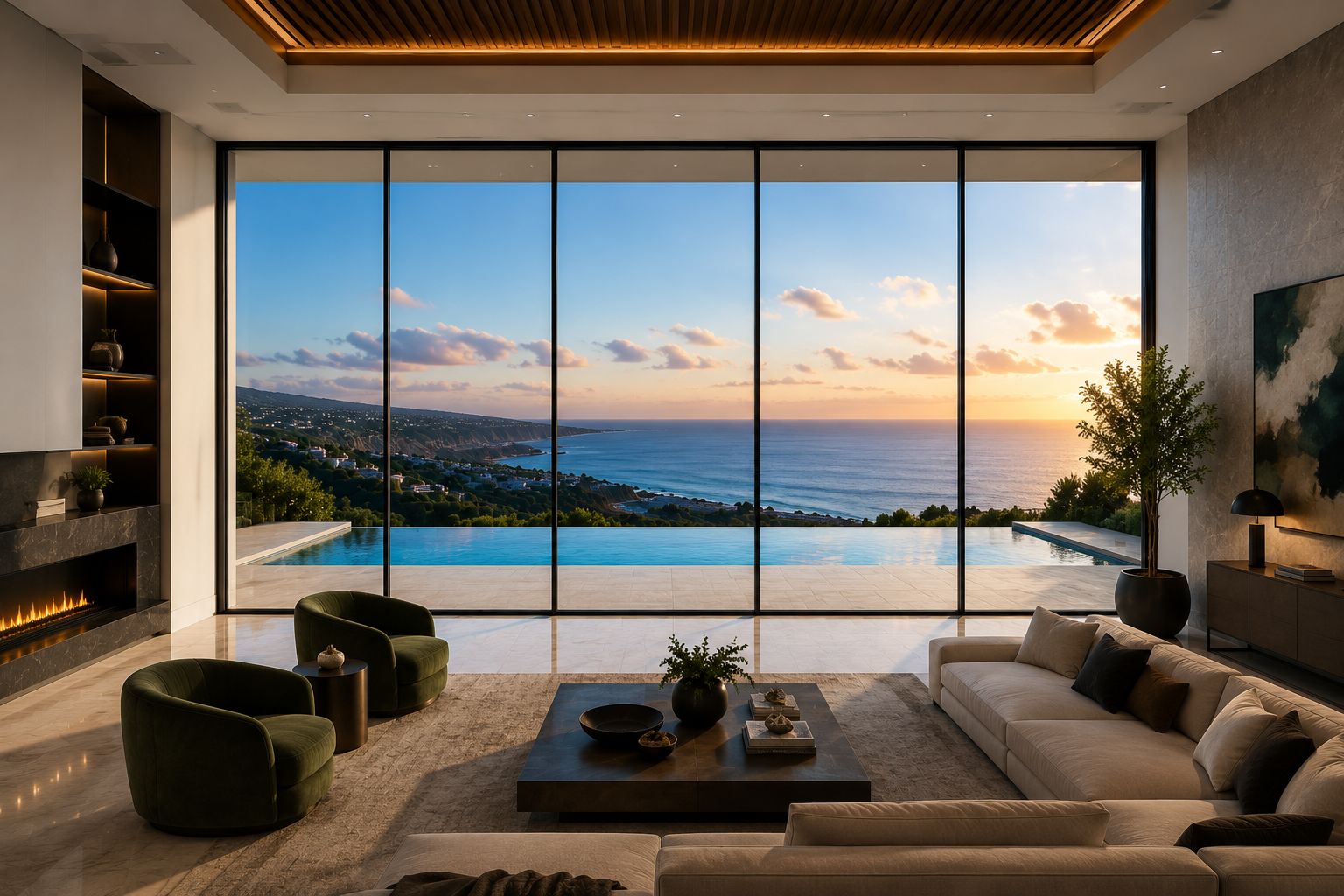
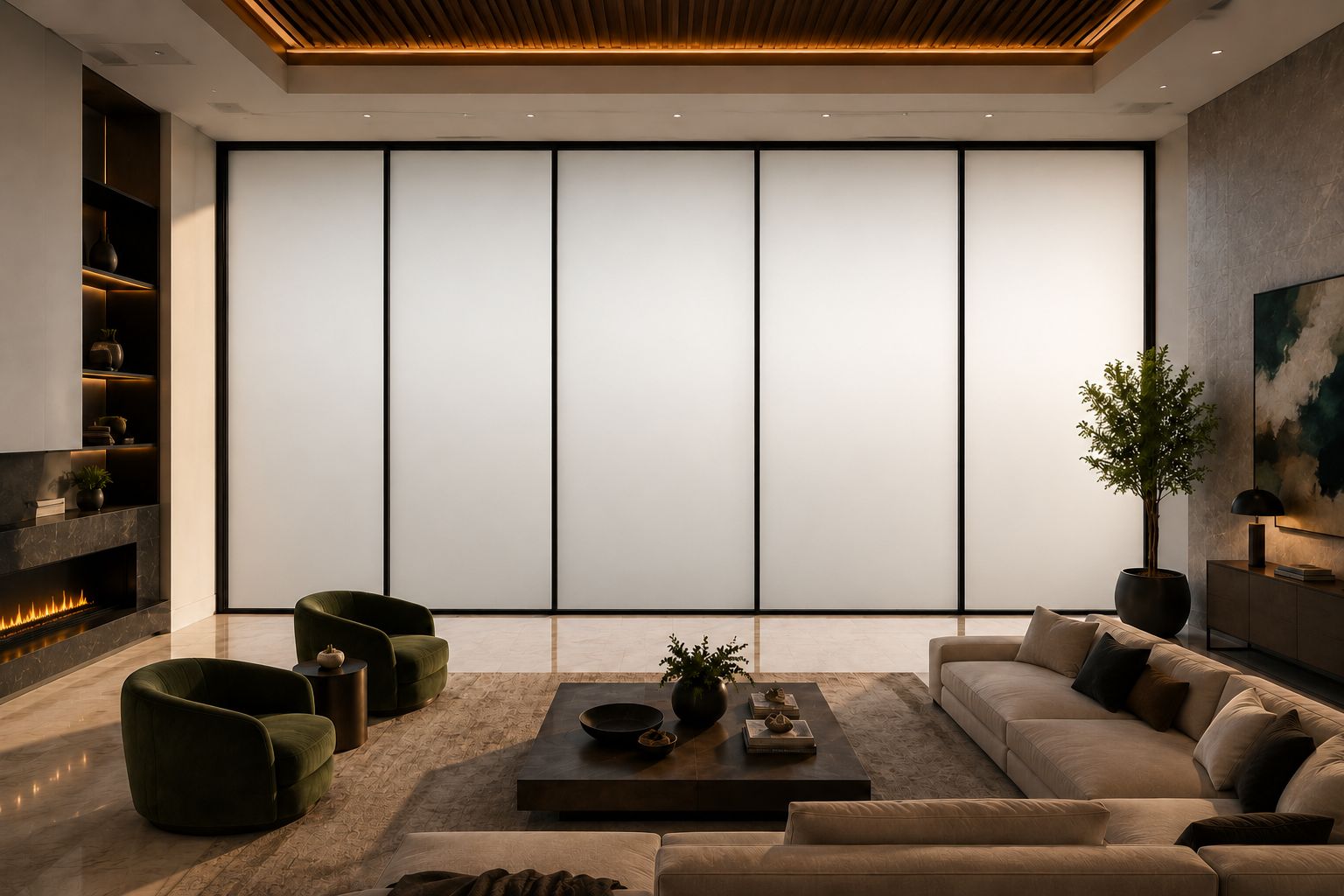
What a smart film installation looks like in a South Florida home or office: measurement, glass prep, film, wiring, switch test, how long each step takes.
Beginner GuidesPDLC film is switchable privacy film for existing glass: how it works, what it costs installed ($55–$90 per sq ft in Miami), where it is used and how long it lasts.
GuidesPDLC smart film uses power only while clear, about 0.5 W per square foot. What a shower, a slider and a conference room actually add to a Florida electric bill.
PRIVACY. CONTROL. MODERN LIVING.
Premium smart film professionally installed on your existing glass. No blinds. No curtains. Just instant privacy.
Get My Free EstimateMost projects run $55-$90 per sq ft installed. See your range before you give us your number.
5.0 ★
68 Google reviews
500+
installations
2-year
warranty