5.0 ★
68 Google reviews
By the Deluxe Smart Film team — reviewed by Awadrey Delgado, founder (500+ switchable film installations in South Florida since 2020) — Updated 7 September 2026
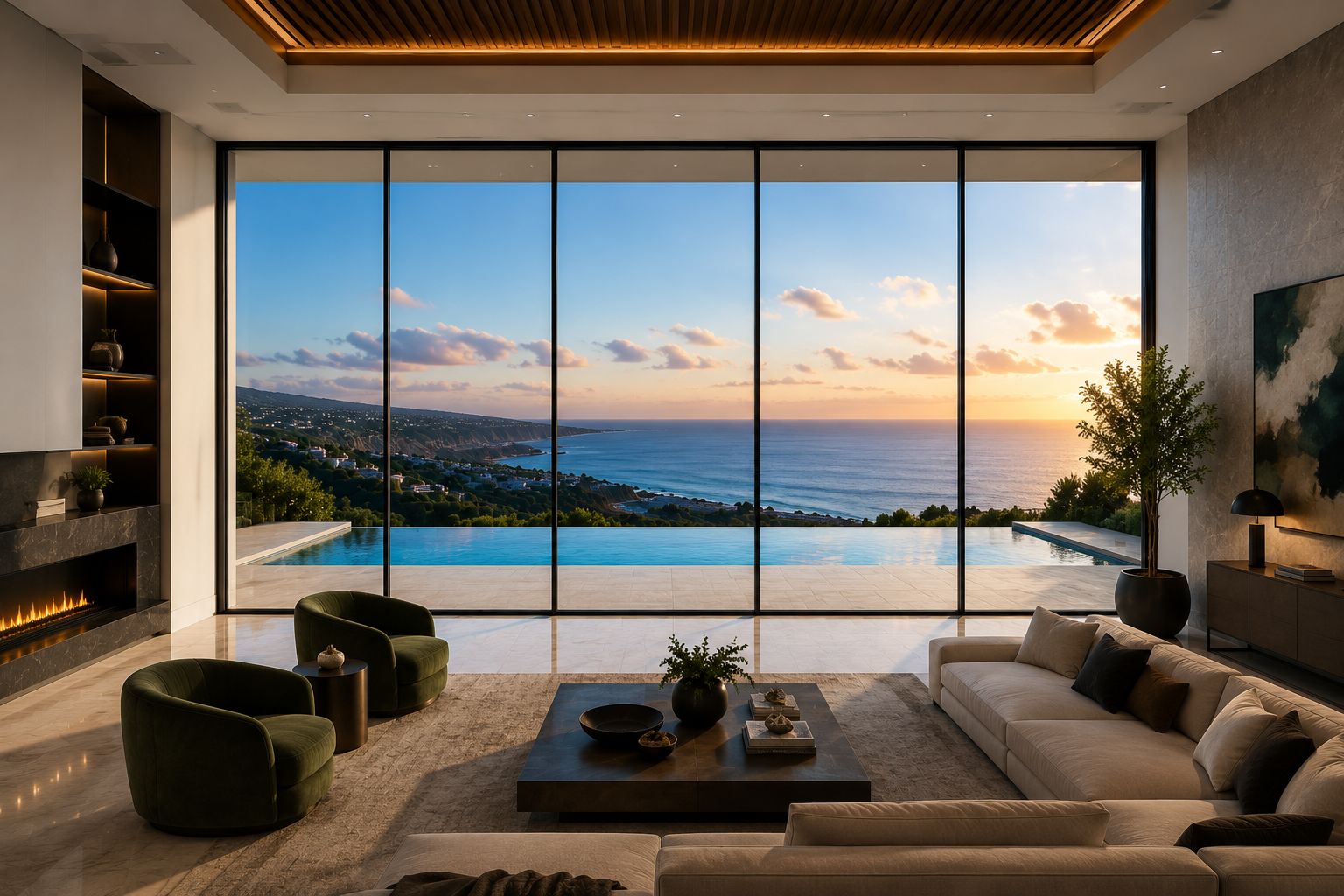
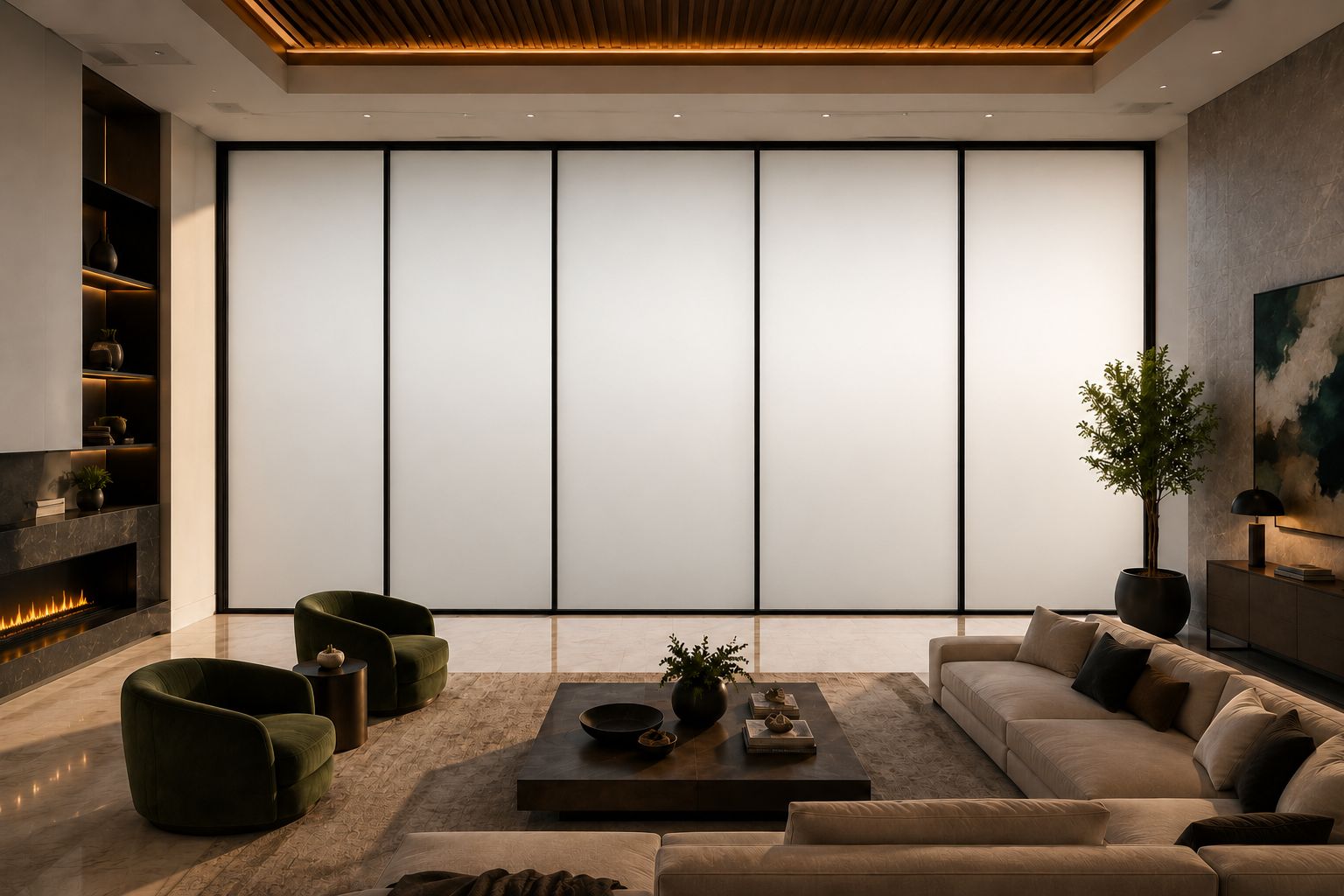
Switchable smart film is a low-voltage electrical product. A small transformer converts household power to the voltage the film needs, and the film is clear whenever that circuit is live and frosted whenever it is not. So “controlling” smart film just means controlling the circuit that feeds the transformer, and almost any switch you would use for a light can do it. Frosted is the natural, unpowered state; clear is the powered state.
Most residential and office installs use an ordinary wall switch by the door, wired to the transformer. Flip it up, the glass goes clear; flip it down, it frosts in under a second. One switch controls one zone, which can be a single shower panel or a whole run of conference-room glass wired to the same transformer. A wall switch is included in a standard installation at our $55 to $90 per square foot pricing; it is the option we recommend for rentals, guest suites and anything a visitor might need to operate without instructions.
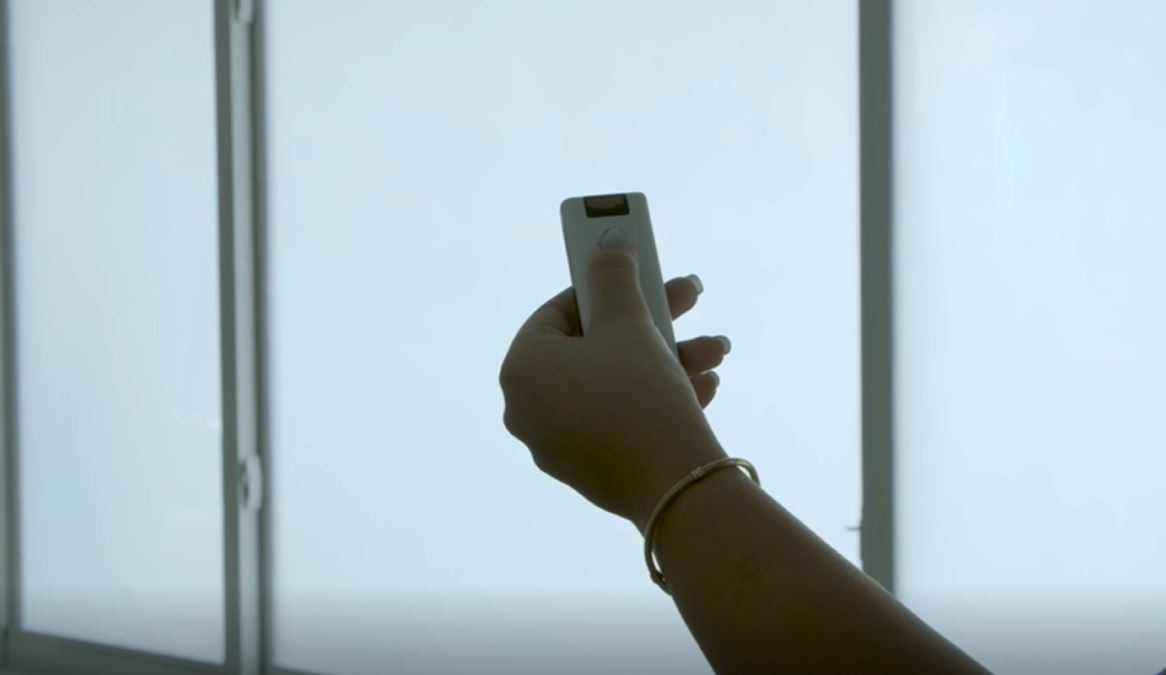
A handheld RF remote pairs with a receiver at the transformer. It suits bathrooms and bedrooms where cutting a switch into tile or stone is not worth it, and multi-channel remotes can run several zones from one handset. If a remote is lost, the receiver can be paired to a replacement, and a wall switch or smart switch can always be added later on the same circuit.
Smart film does not need its own app. Put a Wi-Fi or Zigbee smart switch or smart relay in place of the wall switch, and the film becomes just another device in Apple Home, Google Home, Alexa, SmartThings or Lutron: voice commands (“frost the office glass”), schedules (clear at 8 am, private at 6 pm), scenes (movie night frosts the living-room sliders) and remote control from anywhere. In commercial buildings the same relay can be driven by a room-booking system or the building automation system, so a conference room frosts when a meeting starts.
Because the film only needs a contact closure, it works with occupancy sensors (an exam room or restroom frosts when someone walks in), door contacts, timers and keypads. Medical and dental offices use this so staff never have to remember the switch. See the installer-questions guide for what to ask about control wiring before you sign.
Standard PDLC film has two states, clear and frosted. Some films and transformers support stepless dimming between them, which gives a soft haze rather than full privacy; if that matters to you, ask which product and transformer are being quoted, because not every combination supports it.
Standard smart film frosts when power is lost, which is the safe direction for a bathroom or bedroom: you lose the view, not the privacy. Reverse-mode film that stays clear without power exists but is uncommon and costs more, and few clients want it. Power draw is small either way, about 0.3 to 0.5 watts per square foot only while the film is clear and nothing while it is frosted; see our electricity-cost guide for real monthly figures.
Choose a wall switch for anything guests or tenants will use. Choose a remote for tiled bathrooms and bedside control. Choose a smart switch or relay if you already run Apple Home, Google Home or Alexa, want schedules, or are fitting out an office. Sensors and building-automation tie-ins are for clinics, conference rooms and hotels. All of these can be combined on the same glass, and any of them can be added after the film is installed.
Not every window that needs privacy needs privacy film, and an honest installer will say so. A window that must never be clear — a bathroom window on a walkway, a sidelight next to a front door — is cheaper in permanent frosted window film than in switchable smart film. There is no point paying for a switch you will never flip, and the frosted film does the job for a quarter of the price.
A rental, or any spot where you cannot get power to the glass, rules switchable film out entirely. Smart film needs a low-voltage transformer and concealed wiring; if there is no outlet nearby and the lease will not allow it, frosted film or mirror film go on with no wiring at all and come off cleanly when the tenancy ends.
Single-pane glass in poor condition should be dealt with before any film goes on it. Film will not hide a pane that is already crazed, scratched or losing its seal, and applying film to failing glass means the film comes off when the pane is eventually replaced. Fix the glass first, then film it.
A west-facing heat and glare problem is a solar-control job, not a privacy job. If the room is unusable at 3 pm because of the sun, window privacy film will not fix that — you need a film that rejects heat. See our window tinting page for the solar-control films that cut heat and glare, which can be paired with frosted or switchable film on the same glass if you need both.
See pricing → smart film cost in Miami. Get a free quote → request one here. Questions to ask an installer → the 12 questions to ask any installer.
Explore the incredible speed of PDLC technology. Find out why the transition is nearly instantaneous and how it benefits your daily life.
GuidesPDLC smart film uses power only while clear, about 0.5 W per square foot. What a shower, a slider and a conference room actually add to a Florida electric bill.
GuidesWhat a smart film installation looks like in a South Florida home or office: measurement, glass prep, film, wiring, switch test, how long each step takes.
PRIVACY. CONTROL. MODERN LIVING.
Premium smart film professionally installed on your existing glass. No blinds. No curtains. Just instant privacy.
Get My Free EstimateMost projects run $55-$90 per sq ft installed. See your range before you give us your number.
5.0 ★
68 Google reviews
500+
installations
2-year
warranty