5.0 ★
68 Google reviews
By the Deluxe Smart Film team — reviewed by Awadrey Delgado, founder (500+ switchable film installations in South Florida since 2020) — Updated 15 July 2026
Polymer Dispersed Liquid Crystal (PDLC) is a remarkable composite material. To truly appreciate smart film, one must delve into the science that makes it possible.
Liquid crystals are a unique state of matter that exhibits properties between those of conventional liquids and those of solid crystals. They can flow like a liquid, but their molecules can be oriented in a crystal-like way. This orientation is highly sensitive to external factors, particularly electric fields.
In PDLC, these liquid crystals are not free-flowing; they are encapsulated in micro-droplets dispersed throughout a solid polymer matrix. This matrix holds the droplets in place and provides the structural integrity needed to form a thin, flexible film.
The secret to PDLC lies in the concept of the 'refractive index'—a measure of how much light bends when entering a material.
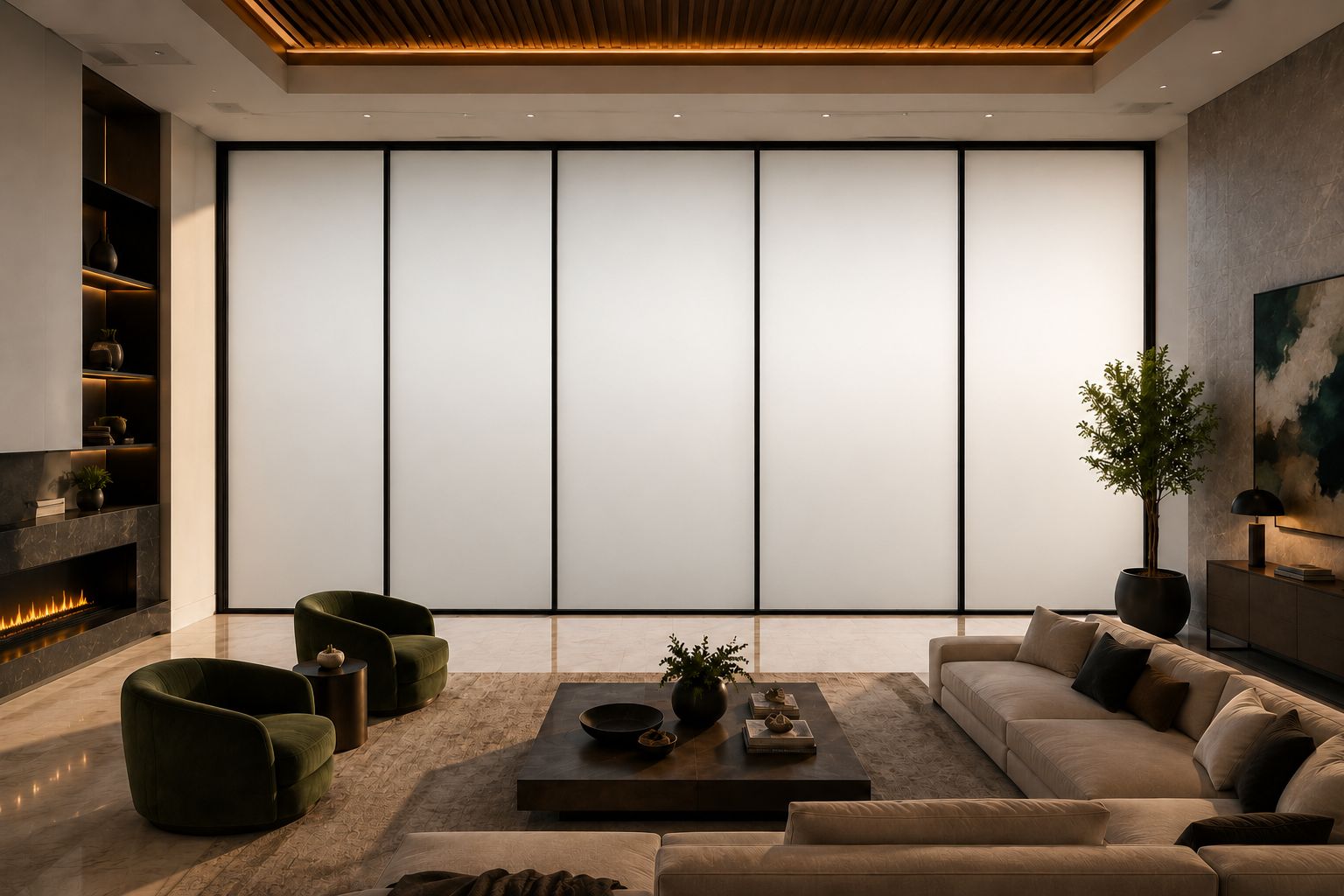
When the power is OFF, the refractive index of the randomly oriented liquid crystals does not match the refractive index of the surrounding polymer. This mismatch causes light to scatter at the boundaries of every micro-droplet, resulting in a milky, opaque appearance.
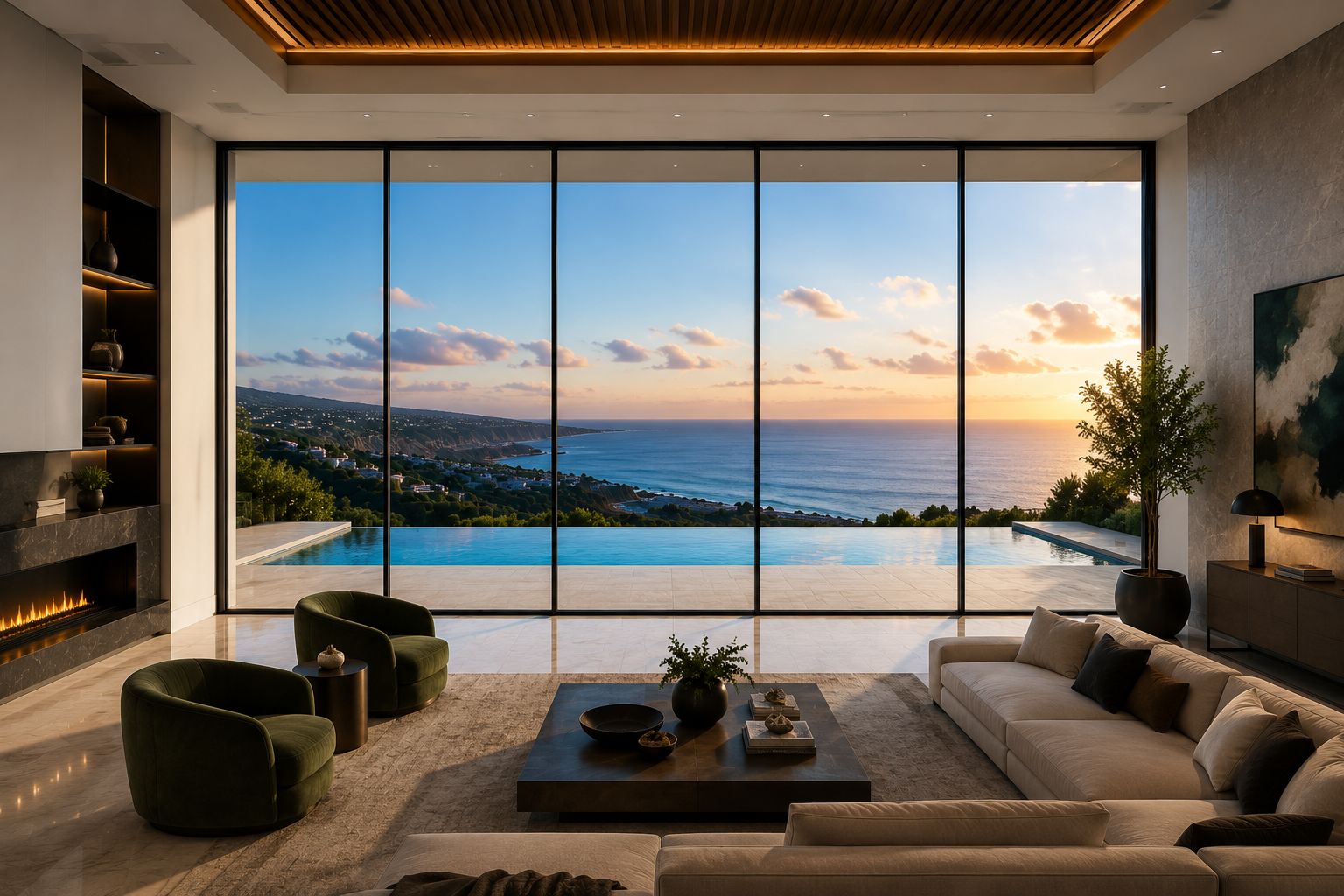
When the power is ON, the electric field aligns the liquid crystals. In this aligned state, their refractive index matches that of the polymer matrix. Because the refractive indices match, light passes straight through without scattering, rendering the material clear.
The elegant interplay between liquid crystals, polymers, and electrical fields makes PDLC one of the most practical and fascinating applications of materials science in modern architecture.
PDLC film is switchable privacy film for existing glass: how it works, what it costs installed ($55–$90 per sq ft in Miami), where it is used and how long it lasts.
HistoryTrace the origins of smart glass from early laboratory experiments to the sleek, reliable architectural solutions available today.
GuidesPDLC smart film uses power only while clear, about 0.5 W per square foot. What a shower, a slider and a conference room actually add to a Florida electric bill.
PRIVACY. CONTROL. MODERN LIVING.
Premium smart film professionally installed on your existing glass. No blinds. No curtains. Just instant privacy.
Get My Free EstimateMost projects run $55-$90 per sq ft installed. See your range before you give us your number.
5.0 ★
68 Google reviews
500+
installations
2-year
warranty