5.0 ★
68 Google reviews
By the Deluxe Smart Film team — reviewed by Awadrey Delgado, founder (500+ switchable film installations in South Florida since 2020) — Updated 7 September 2026
Standard smart film frosts to white. Gray, black and colored versions exist, some films dim instead of switching, and patterns can be printed over the frost. Here is what each one looks like when it is on and off, and the trade-offs.
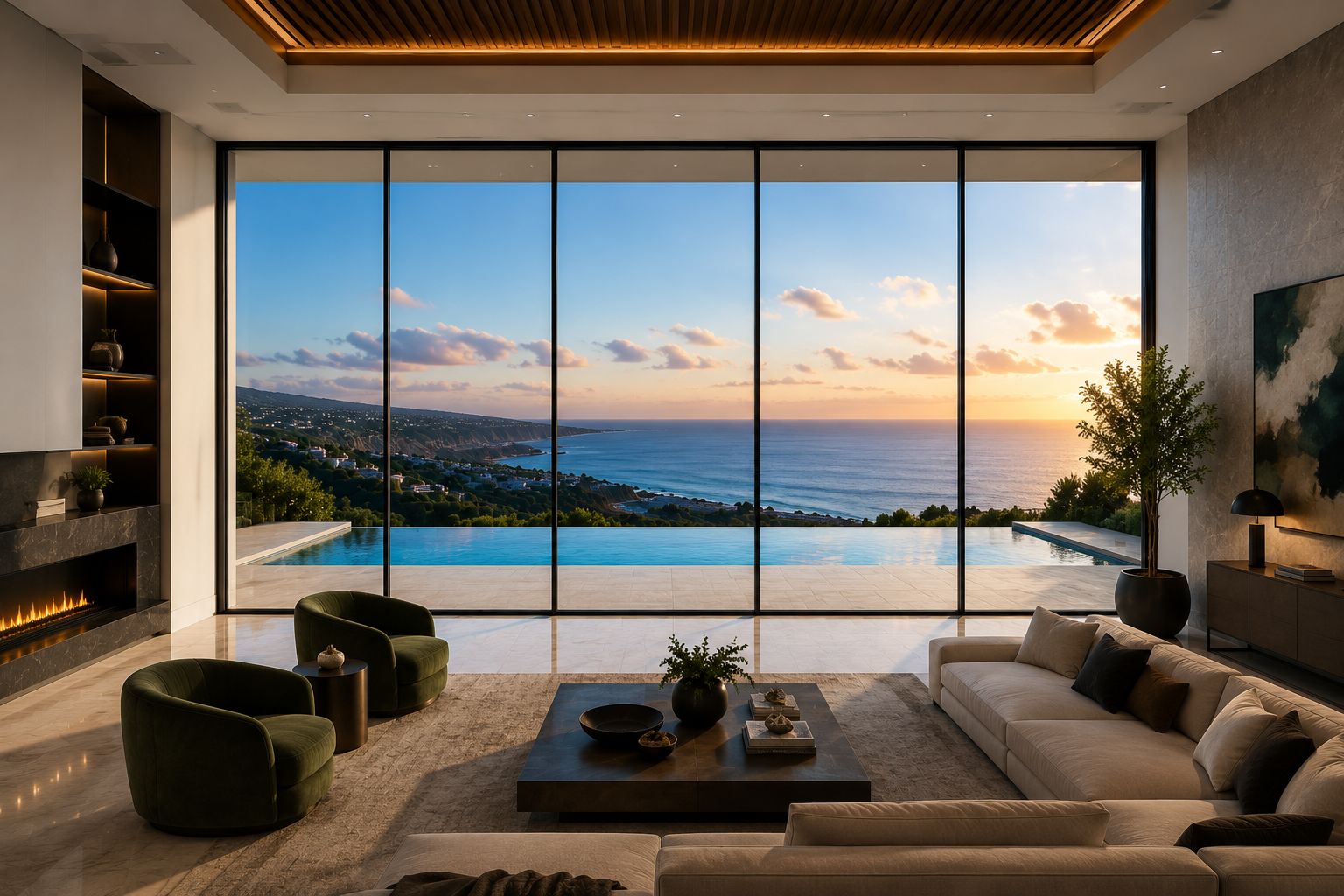
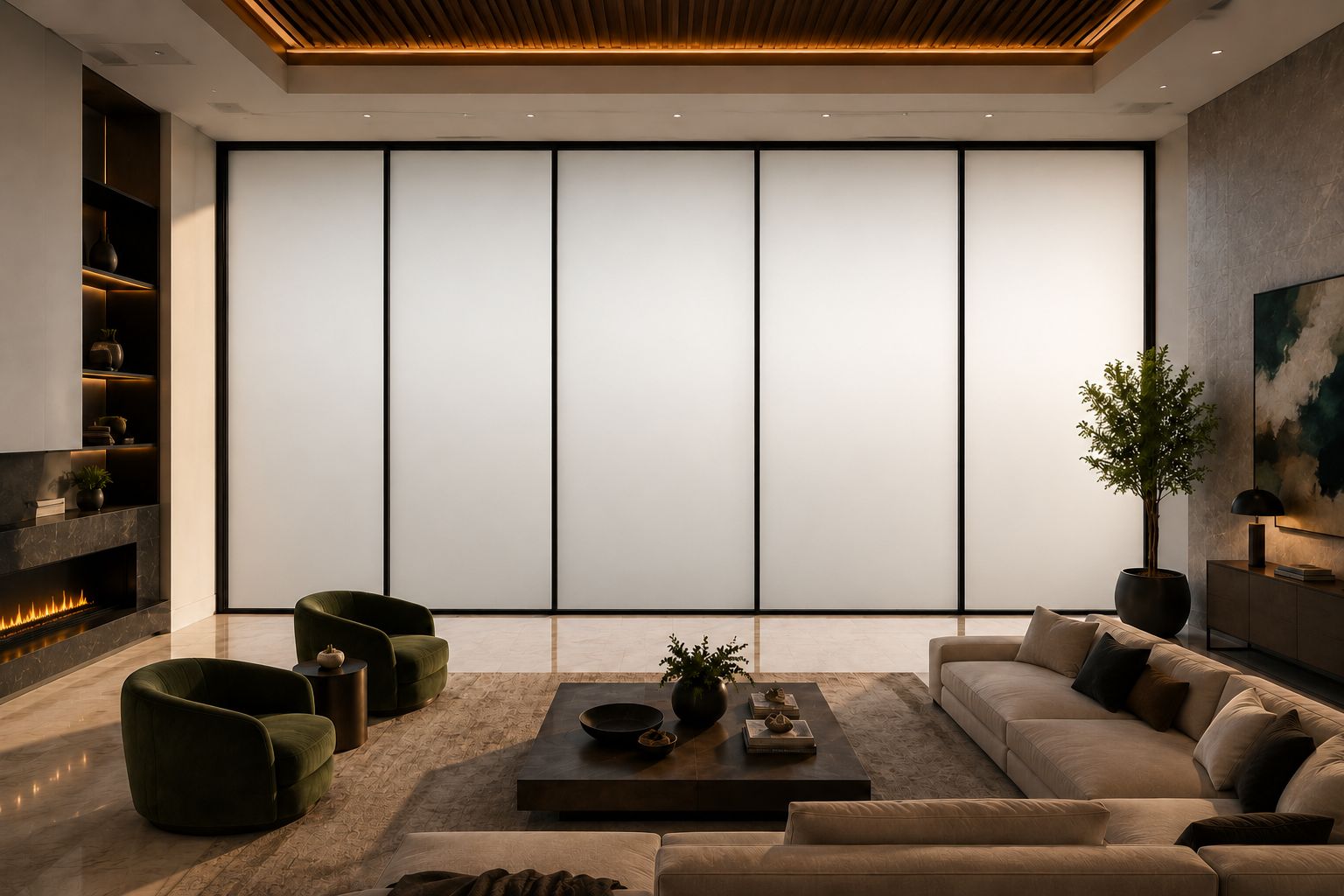
Almost every installation uses white PDLC film. Off, it is a soft, evenly lit milky white, like sandblasted glass. On, it is the clearest of all the variants: light transmission in the 75 to 80 percent range and a haze of a few percent, so the view is intact and the glass reads as ordinary glass. It is also the best rear-projection surface. Our transparency guide explains the clarity and haze numbers to ask for.
Gray and black PDLC films frost to a charcoal or dark gray instead of white, which designers choose for dark interiors, offices with dark frames and glass that should not glow white at night. The trade-off is the on state: these films stay tinted when clear, roughly like a light window tint, so a water view or a bright room loses some brightness. They also cost more and are made by fewer manufacturers, which affects lead time. Choose them for looks on interior partitions, not for view glass.
Blue, green, pink, red and yellow PDLC films exist. Off, the frost takes the color; on, the glass carries a colored tint. They are decorative products for showrooms, nightlife, salons and feature walls rather than for windows you look through. Availability is limited and the film is usually a special order, so allow extra lead time and ask for a physical sample before committing a whole wall to a color.
"Gradation" or gradient means two different things. Dimmable smart film uses a transformer that varies the voltage, so the glass can sit anywhere between frosted and clear rather than only at the two ends; not every film and transformer pair supports it, so it has to be specified up front. A gradient look can also be printed: a decorative film with a frost-to-clear fade, a band, a logo or a pattern is layered with the switchable film, so the pattern stays permanent while the rest of the pane switches. Printed and frosted bands are also how a company logo goes on switchable reception glass.
Searches for "laminated smart film" usually mean the PDLC layer sealed inside a new laminated glass unit at the factory, which is smart glass rather than film: it replaces the glazing, is fully encapsulated, and costs several times more. Self-adhesive smart film is the same PDLC layer with an adhesive back, applied to the glass you already have. Our smart film vs smart glass comparison covers cost and when each is the right choice.
Our standard installation is white self-adhesive PDLC film, because it gives the clearest on state and the most even frost, and it is what most homes, condos and offices want. If a project calls for gray, black, colored or dimmable film, ask at the quote stage: we will tell you what is available for that pane size, the clarity trade-off, and the lead time before you commit. Installed pricing for standard film is $55 to $90 per square foot; specialty films are quoted per project. See our pricing guide, or request a quote with a photo of the glass.
See pricing → smart film cost in Miami. Get a free quote → request one here. Questions to ask an installer → the 12 questions to ask any installer.
Not all smart films are created equal. Discover how to evaluate clarity, haze, and opacity to ensure you get the highest quality product.
GuidesWindow tint blocks heat and glare all day; smart film gives privacy only when you switch it on. Costs, what each does in a Miami home or office.
ComparisonsUnderstand the key differences between self-adhesive smart film and laminated smart glass to make the best choice for your next project.
PRIVACY. CONTROL. MODERN LIVING.
Premium smart film professionally installed on your existing glass. No blinds. No curtains. Just instant privacy.
Get My Free EstimateMost projects run $55-$90 per sq ft installed. See your range before you give us your number.
5.0 ★
68 Google reviews
500+
installations
2-year
warranty