5.0 ★
68 Google reviews
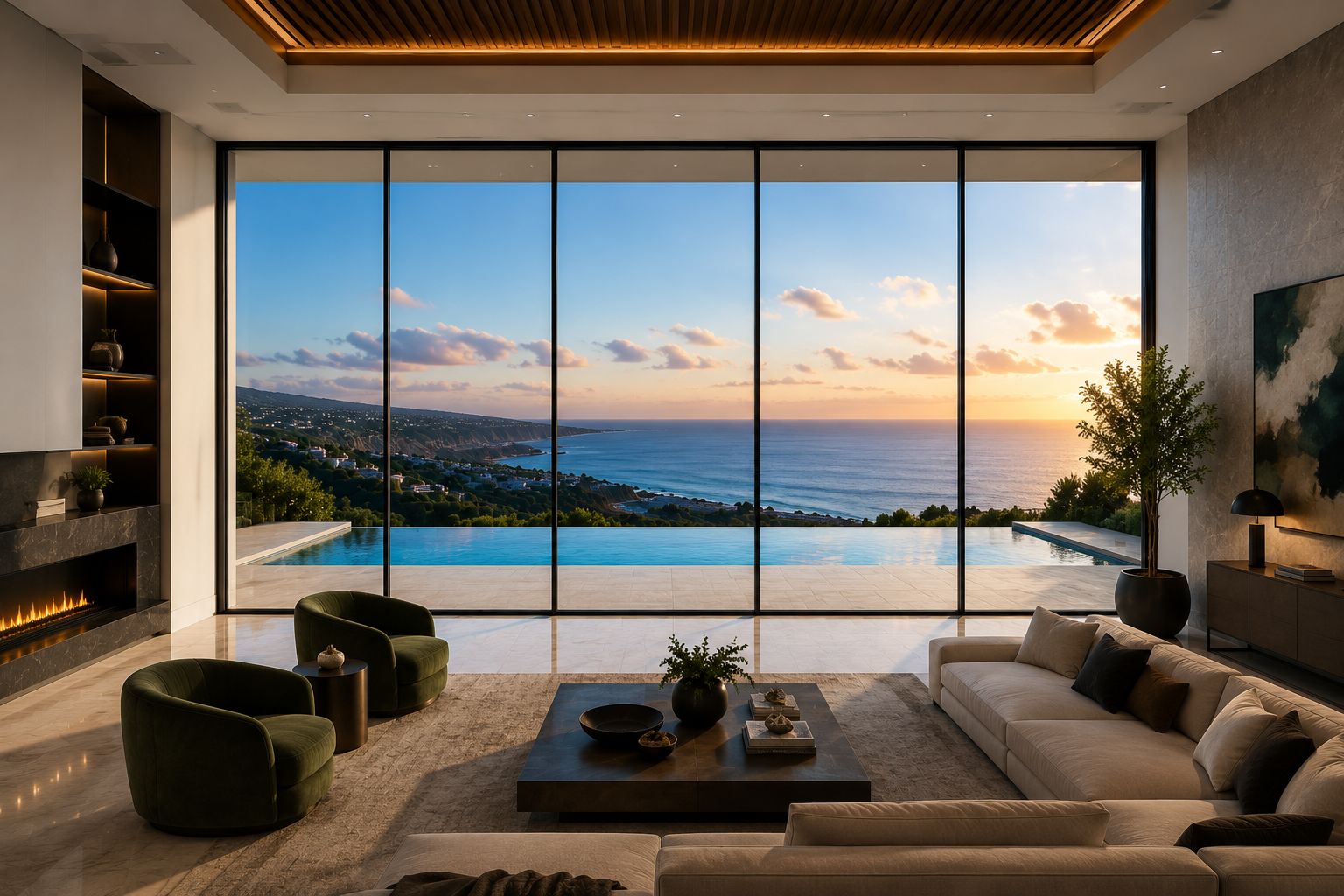
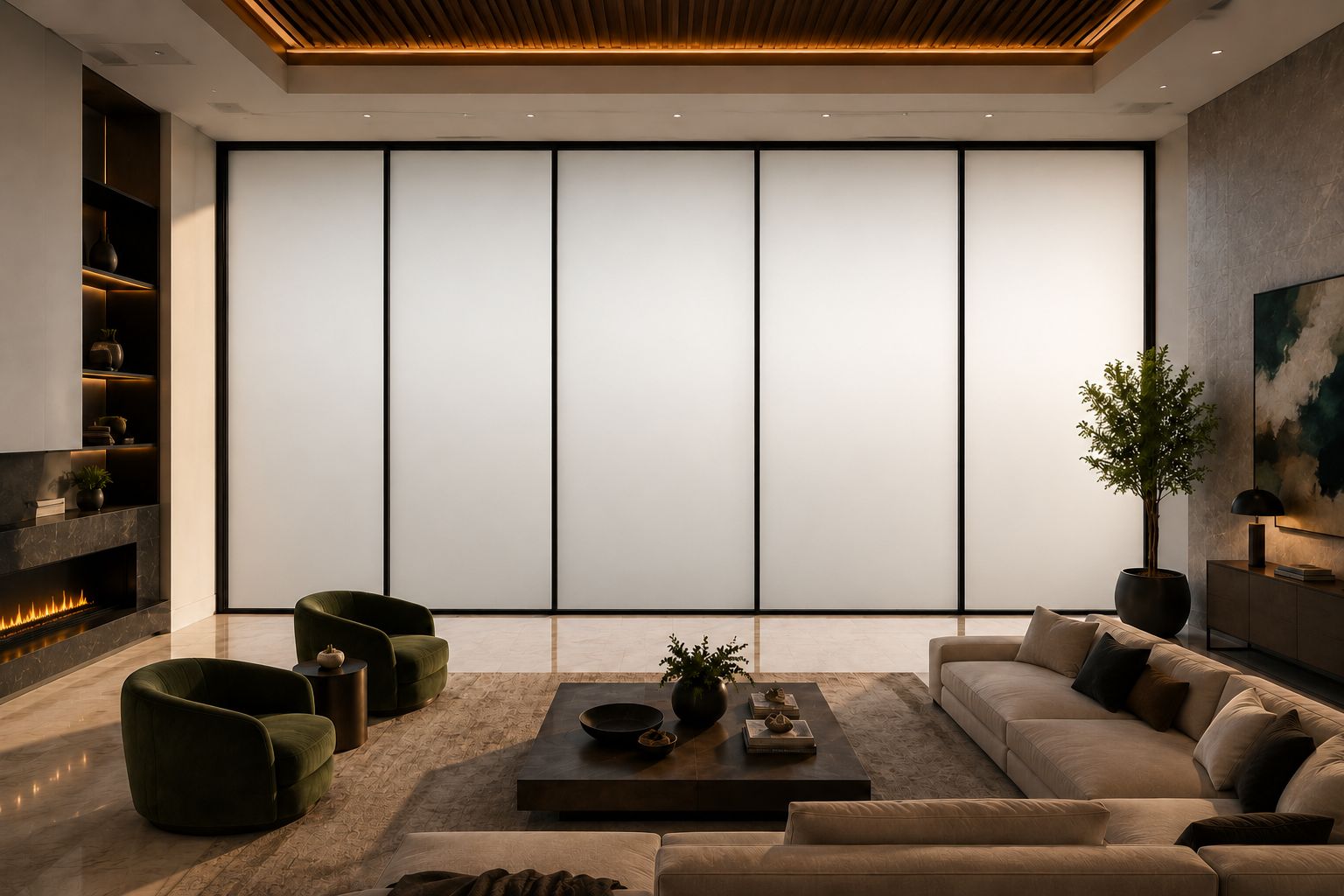
Understanding active glass technologies.
Electrochromic glass slowly tints to block solar heat and glare, taking minutes to transition. PDLC film instantly switches from clear to frosted in milliseconds, providing immediate privacy on demand.
| Feature | PDLC Smart Film | Electrochromic Glass |
|---|---|---|
| Transition Speed | Instant (< 0.1s) | Slow (5-15 minutes) |
| Privacy | Absolute (Frosted) | Partial (Tinted) |
| Retrofit Capability | Yes (Applied to existing glass) | No (Requires new glass) |
| Primary Benefit | On-demand privacy | Solar heat reduction |
Electrochromic glass (the type used on office towers and airport facades) is sold as a new insulated glass unit with low-voltage control wiring. Project pricing is commonly quoted at $50 to $150 per square foot for the glass, plus full window replacement and a control system, and it is almost always specified during new construction or a re-glazing. PDLC smart film goes onto the glass you already own at $55 to $90 per square foot installed, including the transformer and a wall switch or remote, and a typical residential job is done in a day.
Choose electrochromic glass if you are building or re-glazing a facade and the goal is to reduce solar heat and glare across the whole day: it tints gradually over several minutes and always stays transparent. Choose PDLC film if you need privacy in under a second on glass you are keeping, inside or out. Electrochromic glass never goes opaque and takes minutes to change state, which makes it useless for a bathroom, a bedroom wall or a meeting room.
Contact our experts to discuss which solution is perfectly suited for your specific architectural needs.
Request a Free ConsultationPRIVACY. CONTROL. MODERN LIVING.
Premium smart film professionally installed on your existing glass. No blinds. No curtains. Just instant privacy.
Get My Free EstimateMost projects run $55-$90 per sq ft installed. See your range before you give us your number.
5.0 ★
68 Google reviews
500+
installations
2-year
warranty