5.0 ★
68 Google reviews
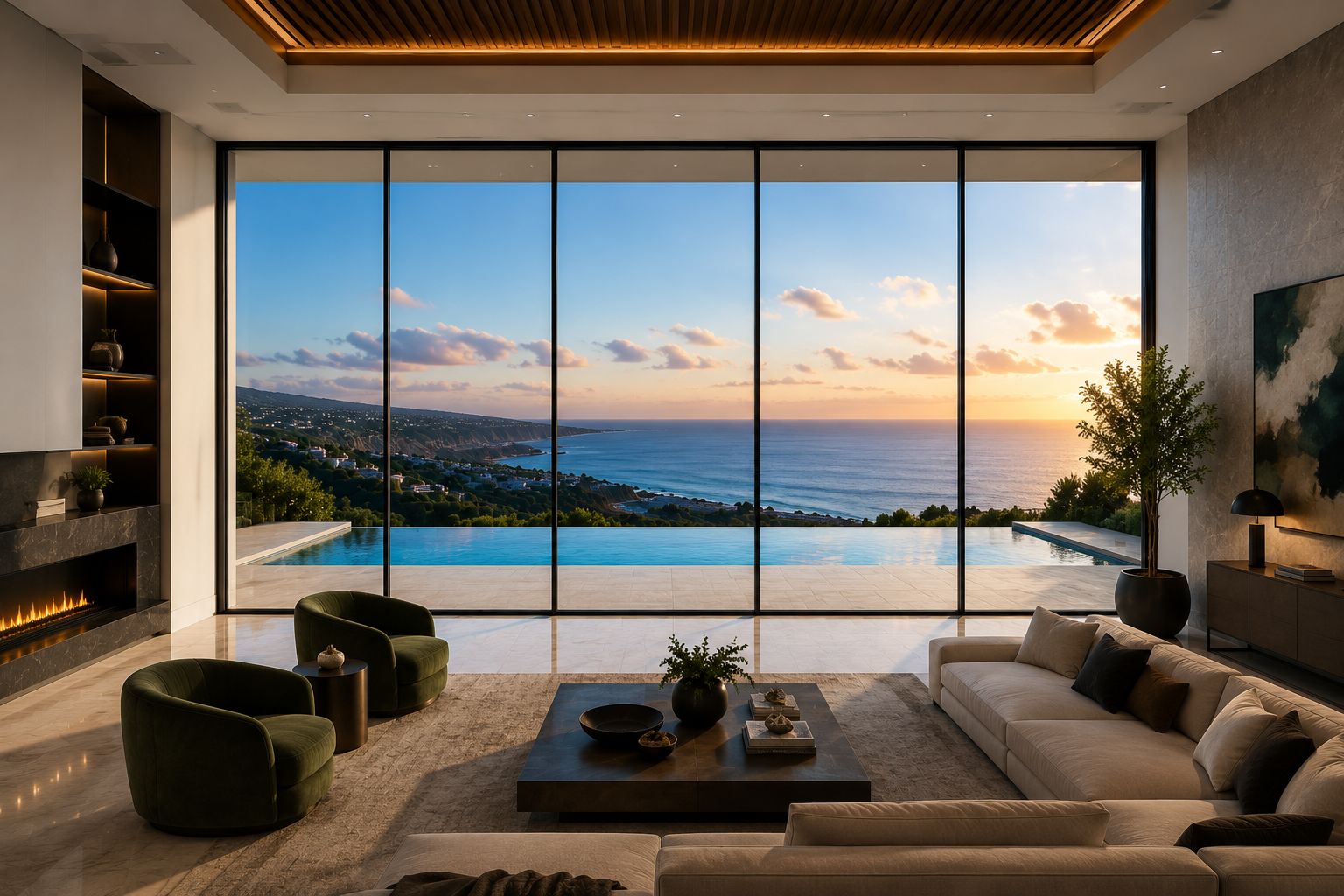
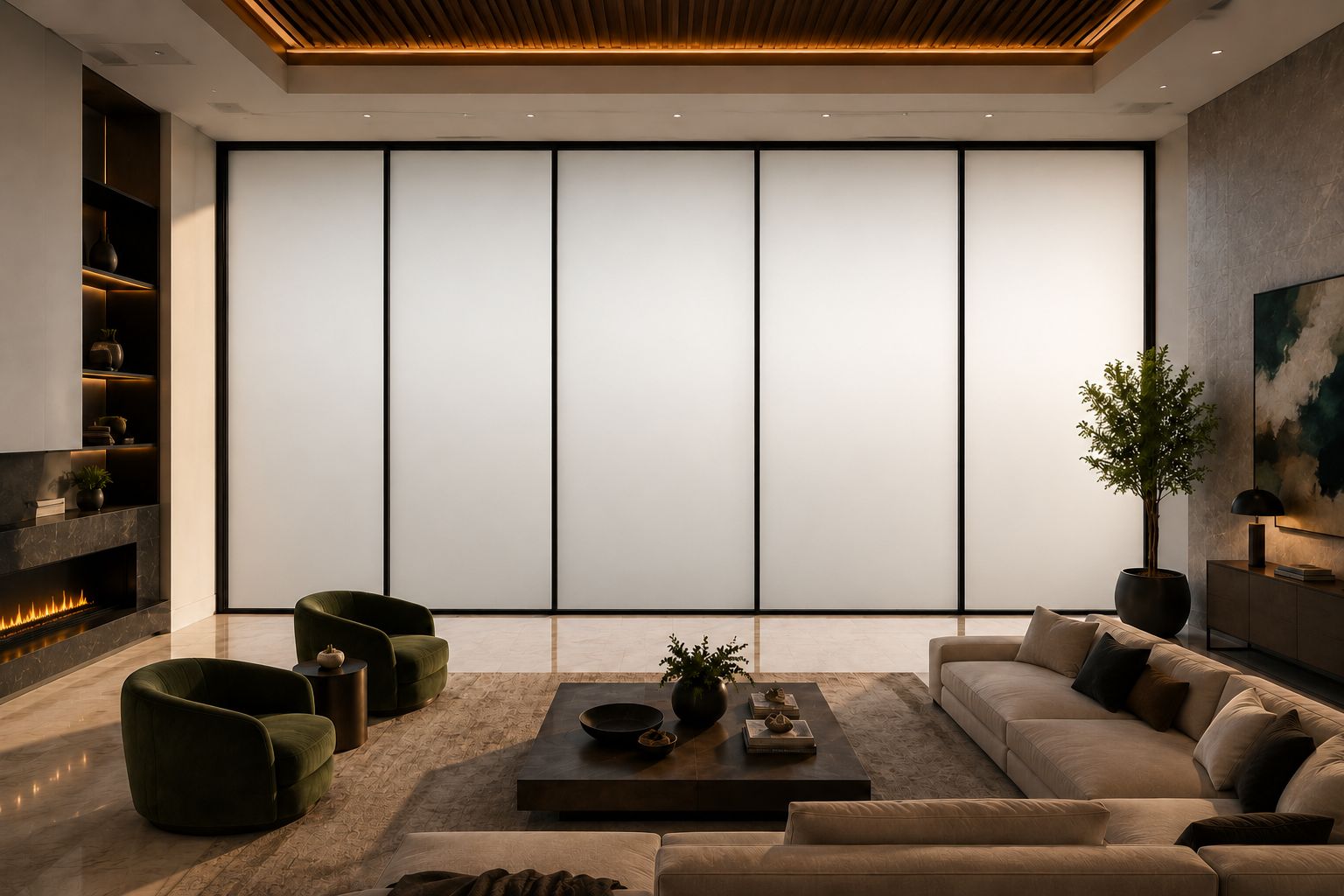
Privacy control versus glare control.
PDLC (Polymer Dispersed Liquid Crystal) is designed for privacy, switching from clear to frosted. SPD (Suspended Particle Device) is designed for light control, tinting from clear to dark blue/black to block light without turning opaque.
| Feature | PDLC (Privacy) | SPD (Tinting) |
|---|---|---|
| Primary Purpose | Complete Privacy | Glare & Light Control |
| Off State | Frosted / Opaque | Dark Tinted |
| On State | Clear | Clear (Slight blue tint) |
| Privacy Level | Full visual privacy | Silhouettes visible |
| Best Application | Bathrooms, Conference Rooms | Skylights, Exterior Facades |
PDLC smart film installed on the glass you already have runs $55 to $90 per square foot in Miami, so a two-panel sliding door is about $2,500 to $5,400. SPD (suspended particle device) is not a retrofit film: it is sold as new laminated glass, typically quoted at $100 to $200 or more per square foot for the glass alone before the old glass is removed, the frame is reworked and, for exterior openings in Miami-Dade, a new product approval is pulled. The same slider in SPD glass usually lands well above $10,000. Both draw a small current only in the clear state; PDLC uses about 0.3 to 0.5 watts per square foot while clear and nothing while frosted.
Choose SPD if the problem is glare and heat on a skylight, a west-facing curtain wall or a yacht's saloon windows and you are replacing the glass anyway: SPD dims to a deep blue-grey while staying see-through. Choose PDLC film if you need real privacy (a bathroom, bedroom, exam room or conference room) or you want to keep the glass you have. SPD never turns opaque, so silhouettes and movement stay visible through it, especially at night with the lights on.
Contact our experts to discuss which solution is perfectly suited for your specific architectural needs.
Request a Free ConsultationPRIVACY. CONTROL. MODERN LIVING.
Premium smart film professionally installed on your existing glass. No blinds. No curtains. Just instant privacy.
Get My Free EstimateMost projects run $55-$90 per sq ft installed. See your range before you give us your number.
5.0 ★
68 Google reviews
500+
installations
2-year
warranty